A practical guide to Australian Facebook groups, patient organisations and online support communities.
Living with a persistent skin condition can be isolating.
There is the condition itself: the itching, irritation, scaling, inflammation, visible changes to the skin or repeated flare-ups.
But there is also everything that comes with it.
Trying to understand why symptoms keep returning. Working through different management approaches. Waiting for specialist appointments. Wondering whether somebody else’s experience is relevant to you. Explaining the condition to family, friends or employers. And, for many people, simply wanting to speak with somebody who understands what living with the condition is actually like.
Good medical care remains central to diagnosing and managing a persistent skin condition.
Peer support can serve a different purpose.
A well-run patient community can give people somewhere to ask questions, hear how others manage day-to-day life, discover reputable resources and feel less alone.
For health professionals, knowing these communities exist can also provide another resource to share with patients who may benefit from connecting with others experiencing similar conditions.
We have therefore compiled several established support communities for Australians living with psoriasis, eczema and disseminated superficial actinic porokeratosis (DSAP).
These organisations and Facebook groups are independent of Skin Screen Clinic. Their inclusion below does not imply an endorsement, affiliation or recommendation of Skin Screen Clinic or any particular treatment.
QUICK DIRECTORY:
Skin Condition Support Groups
Psoriasis
Psoriasis Australia – Online Support and Private Facebook Community
A national Australian patient organisation providing education, peer support, information and advocacy for people affected by psoriasis and psoriatic arthritis. Psoriasis Australia operates private online support communities, including a monitored Facebook group restricted to people with a connection to psoriatic disease.
Psoriasis and Psoriatic Arthritis in Australia
An Australian peer-led Facebook group established specifically to help people living with psoriasis and psoriatic arthritis connect with others facing similar challenges. The group has been recognised by Global Healthy Living Foundation Australia as an established Australian peer-support community.

Eczema
Aussie Adults with Eczema
A closed Facebook group supported by Eczema Support Australia for adults living with eczema.
Aussie Eczema Families
A closed Australian community for parents, carers and families navigating childhood eczema.
Hand Eczema
A dedicated Facebook support group for people affected by hand eczema and hand dermatitis.
Eczema Support Australia currently directs patients to dedicated closed communities for adults, families and hand eczema, alongside its education and support resources. Its eczema information is reviewed by the Australasian College of Dermatologists.

DSAP
DSAP Institute Private Facebook Group
A longstanding international community specifically for people living with disseminated superficial actinic porokeratosis.
Unlike psoriasis and eczema, we have not identified a substantial Australian-specific DSAP Facebook community that we can confidently recommend. Because DSAP is considerably less common, the international DSAP community can provide an opportunity to connect with people who have experience with the condition. The DSAP Institute has directed people to this private Facebook community for a number of years.
Psoriasis support in Australia
For someone looking for a structured Australian starting point, Psoriasis Australia is arguably the most important organisation on this list.
It is an Australian patient organisation dedicated to supporting people affected by psoriasis and psoriatic arthritis and provides information, referrals, education, advocacy, peer support and a helpline.
Its online support program includes private groups facilitated by people with lived experience.
Psoriasis Australia says its closed Facebook support community is monitored and membership is limited to people with a clear connection to psoriatic disease.
That distinction matters.
There is a considerable difference between an open social media page where anybody can publish health claims and a moderated patient-support environment.
Psoriasis Australia also has a Victorian presence, making it particularly relevant to patients and clinicians in Victoria.
Psoriasis and Psoriatic Arthritis in Australia
Another useful option is the peer-led Psoriasis and Psoriatic Arthritis in Australia Facebook group.
The group originated when its founder went looking for Australian peer support while struggling with psoriasis and couldn’t find the type of community she needed.
She created the Facebook group to give other Australians somewhere to speak with people living through similar experiences.
That is the real value of communities like this.
They do not replace dermatological care.
Instead, they can provide something different: lived experience.
Someone newly diagnosed may be able to speak with somebody who has managed psoriasis for years. Someone going through a difficult flare may discover they are not the only person finding it exhausting. Others may gain ideas for questions they should raise during their next medical appointment.
Other Psoriasis Resources
Psoriasis Australia also links patients to resources including its Facebook community and the Australian Get Psorted education initiative.
Patients experiencing joint pain, stiffness or other symptoms potentially associated with psoriatic arthritis should also discuss those symptoms with their healthcare professional rather than relying solely on information from a skin-focused support group.
Eczema support groups in Australia
Eczema is a chronic, complex and often intensely itchy skin condition that can have significant effects on quality of life.
Its impact can extend well beyond the appearance of the skin.
Sleep can be affected.
Work and school can become more difficult.
Managing creams, moisturisers and other treatments can become part of everyday life.
Parents of children with eczema can face an entirely different set of challenges again.
For that reason, one generic eczema community is not necessarily enough.
One of the strengths of Eczema Support Australia is that it has created different support communities around different lived experiences.
Aussie Adults with Eczema
Adults living with eczema may experience problems that are very different from those affecting young children.
Eczema can affect employment, relationships, sleep, mental wellbeing, social situations and ordinary activities.
Some people have experienced eczema since childhood. Others develop significant symptoms later in life.
Eczema Support Australia directs adults toward a dedicated closed Facebook community where members can connect with others who understand those experiences.
Aussie Eczema Families
For parents and carers, eczema can become something the entire household manages.
Night-time itching may disrupt sleep.
Parents may have to manage treatment routines, clothing, moisturisers, environmental factors, childcare or school arrangements and questions from a child who simply wants to know why their skin feels different.
Eczema Support Australia’s dedicated families community gives parents and carers somewhere to connect with others experiencing those challenges.
Eczema Support Australia also provides separate parenting resources designed to complement professional eczema care.
Hand Eczema
Hand eczema deserves its own category because a condition affecting a relatively small area of the body can still interfere with an enormous number of everyday activities.
- Writing.
- Cooking.
- Cleaning.
- Using tools.
- Typing.
- Working with chemicals or other irritants.
- Even washing your hands can become uncomfortable.
Eczema Support Australia describes hand eczema as a condition that may involve itching, cracking, dry or flaky skin, blisters or rashes and notes that it may occur independently or alongside other forms of eczema.
It maintains a specific support community for people affected by hand eczema.
Finding support for DSAP
Disseminated superficial actinic porokeratosis, generally shortened to DSAP, presents a different problem when it comes to peer support.
It is less common than psoriasis or eczema, which means people may have significantly fewer opportunities to meet someone locally who shares the diagnosis.
DSAP typically presents as multiple lesions, commonly affecting sun-exposed areas such as the arms and legs. Diagnosis matters because DSAP can be confused with other skin conditions, and management should be discussed with an appropriately qualified practitioner.
A recent systematic review also noted that treatment evidence for DSAP remains limited compared with many more common dermatological conditions, reinforcing the importance of individual clinical decision-making rather than relying on anecdotal treatment stories.
DSAP Institute Facebook community
The most established community online is the DSAP Institute Private Facebook Group.
The community is international, but that can actually be an advantage for people with an uncommon condition because it creates a larger pool of people with direct lived experience.
As with any peer-support community, personal treatment stories should be treated as experiences rather than medical recommendations.
How to use a Facebook health group well
Online communities are most valuable when they help people feel informed, supported and better prepared to participate in their own healthcare.
They become less useful when social media starts replacing clinical advice.
A sensible approach is to use support groups for things such as:
- hearing how other people deal with the practical realities of a condition;
- discovering reputable organisations and educational resources;
- learning what questions other patients have found useful to ask;
- discussing the emotional and social impact of living with persistent skin problems;
- finding people who understand the condition; and
- feeling less isolated.
Be more cautious when posts involve:
- somebody diagnosing another member from a photograph;
- instructions to discontinue prescribed treatment;
- claims that one treatment works for everyone;
- “miracle” products or cures;
- unverified supplements;
- dramatic treatment claims without appropriate evidence; or
- advice that conflicts with instructions from your treating practitioner.
Someone else’s successful experience can be worth discussing.
It is not evidence that the same treatment is appropriate for you.
How to use a Facebook health group well
Perhaps the most useful outcome from joining an online community is becoming better prepared for your next healthcare appointment.
If another member discusses an approach you have never heard about, write it down.
If people repeatedly describe a problem similar to yours, make a note of it.
If you discover questions you had never thought to ask, take those questions with you.
Useful questions for a GP or dermatologist might include:
- Is my diagnosis still the most likely explanation for what is happening?
- Are there other conditions that can look similar?
- Why might my current management approach not be producing the result we hoped for?
- What other established options could be considered?
- Are there reasons a particular treatment would or would not be suitable for me?
- Should I be reviewed by a dermatologist or another practitioner with a particular area of expertise?
For health professionals, referring a patient to a credible support community can complement clinical care by connecting them with education and lived experience between appointments.
The key word is complement.
The support group does not replace the clinician, and the clinician does not necessarily provide the peer connection a support group can offer.
Both can have a role.
When a skin condition remains persistent
There is rarely a universal treatment pathway for persistent skin disease.
Diagnosis, distribution, severity, previous treatments, other medical conditions and individual patient circumstances can all affect what may be appropriate.
If a skin condition is persisting despite management, repeatedly returning, changing unexpectedly or significantly affecting daily life, it is reasonable to discuss the situation again with your GP or dermatologist.
That conversation may confirm that the current approach remains appropriate.
It may lead to a modification.
It may prompt a referral.
Or it may identify other treatment pathways worth discussing.
The important point is that “persistent” does not mean somebody should simply keep trying random treatments found online.
It is a reason to keep the clinical conversation going.
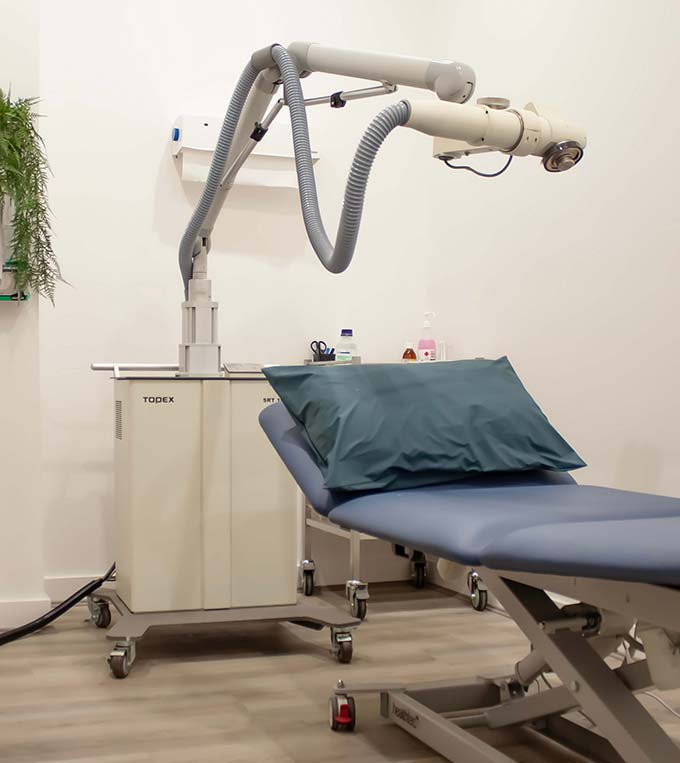
About Grenz Ray Therapy
Skin Screen Clinic provides individual clinical assessment in Victoria for selected persistent or localised presentations of psoriasis and eczema, as well as DSAP, where Grenz Ray Therapy may be considered.
Having one of these conditions does not mean Grenz Ray Therapy will be appropriate.
Skin Screen Clinic states that suitability depends on factors including the diagnosis, treatment area, treatment history and individual clinical circumstances, and requires assessment by a qualified healthcare professional.
If you or your healthcare professional simply want to understand the assessment pathway, referral requirements and how Grenz Ray Therapy is used at Skin Screen Clinic, further information is available below.
This resource is intended to provide general information about patient-support communities and does not constitute medical advice, diagnosis or a recommendation for any individual treatment. The Facebook groups and organisations listed are independent of Skin Screen Clinic unless expressly stated otherwise. Membership criteria, group rules and availability may change. Information obtained through peer-support communities should be discussed with an appropriately qualified healthcare professional where it relates to diagnosis or treatment decisions.
Last reviewed: October 2026.